Guides
Sharing your solar electricity with your neighbors: RCPv and CEL explained simply
7 June 2026 · SOLARSPLIT
A solar installation rarely produces exactly what the building consumes at the same moment. The surplus goes to the grid, bought back at a rate that is often disappointing. Since 2026, two frameworks let you do better: sell that electricity to neighbors, at a price agreed between you, rather than to the grid. They are called the self-consumption community (RCPv) and the local electricity community (CEL), and they are not meant for the same situations.
RCPv: sharing within the building or between neighbors connected together
An RCPv links the producer and the consumers of the same building, or of buildings connected to the same point of the low-voltage grid. The solar electricity does not use the distribution grid: it travels through the internal wiring and, between buildings, through the connection lines.
Direct consequence: no grid-use fees on the shared kilowatt-hours. It is the natural framework for an apartment building with a single rooftop installation, for a condominium association, or for neighboring buildings connected together.
CEL: sharing within the neighborhood, through the public grid
The CEL, in force since the beginning of 2026, widens the circle: producers and consumers in the same area share their electricity through the public grid. No more need for shared lines, being within the perimeter is enough.
Shared kilowatt-hours there pay a grid-use fee, but a reduced one: a 40% discount when the current stays at the same grid level, 20% if it changes level. It is the framework for neighbors across a neighborhood, for the producer supplying the house across the street, or for a village getting organized.
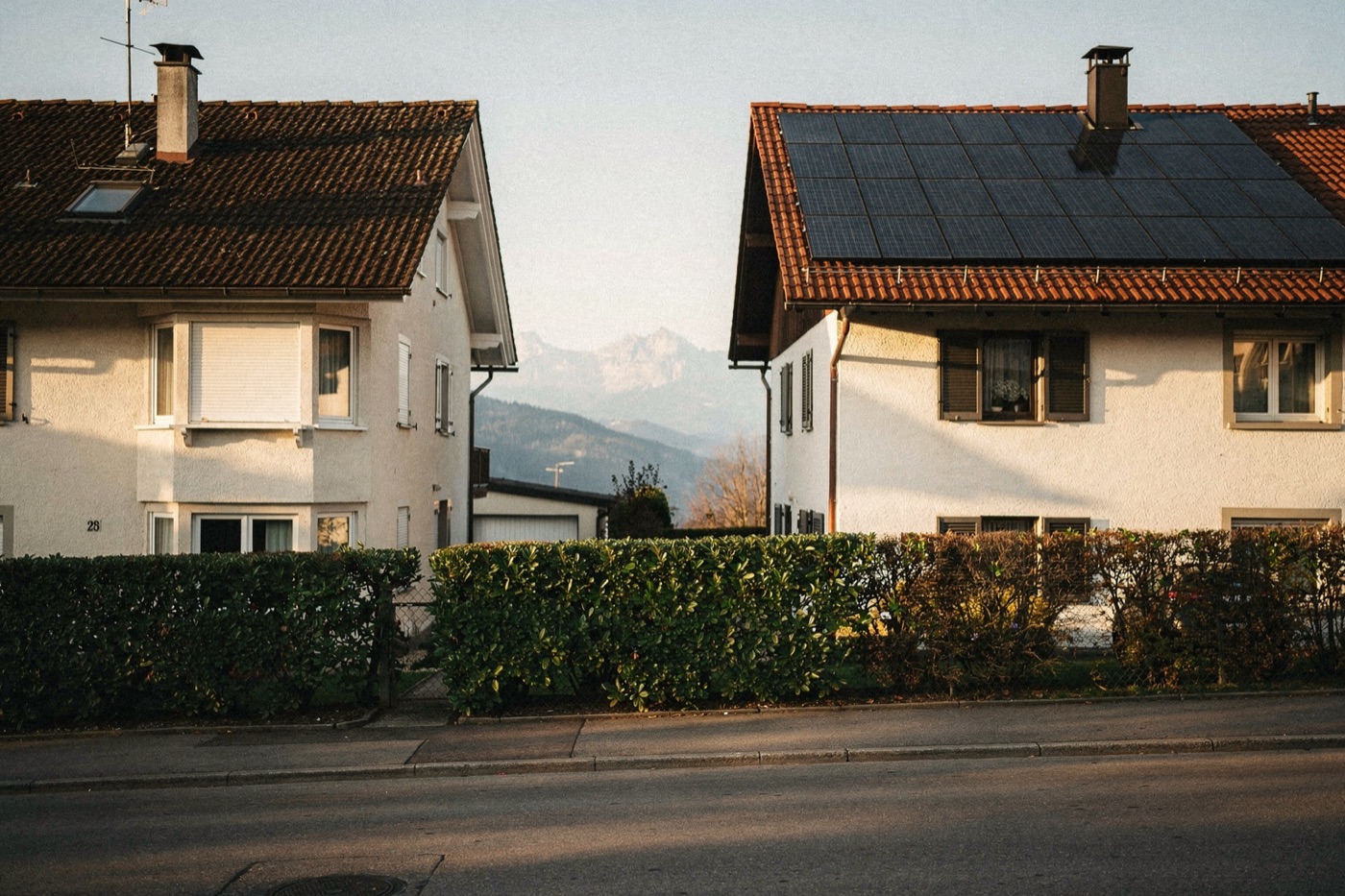
How to choose
- Same building, or buildings connected to the same point of the low-voltage grid: RCPv, sharing with no grid-use fee at all.
- Neighbors separated by public land: CEL, sharing through the grid at a reduced fee.
The two frameworks also combine very well: a building with an RCPv can sell its remaining surplus to the neighborhood CEL.
What SOLARSPLIT Community Connect brings
Forming a community, allocating kilowatt-hours among participants, billing each one their fair share: it is recurring administration, and it is precisely what SOLARSPLIT Community Connect automates, from forming the community to billing each participant.
And if you do not have an installation yet, everything starts with your roof’s potential: the free simulation tells you in a few minutes. To understand the rest of the journey, read how a solar project unfolds.
And your roof, what is it worth?
The simulation is free and online, based on your building's public data.
Simulate my project