RCPv Since 2025
Virtual self-consumption group
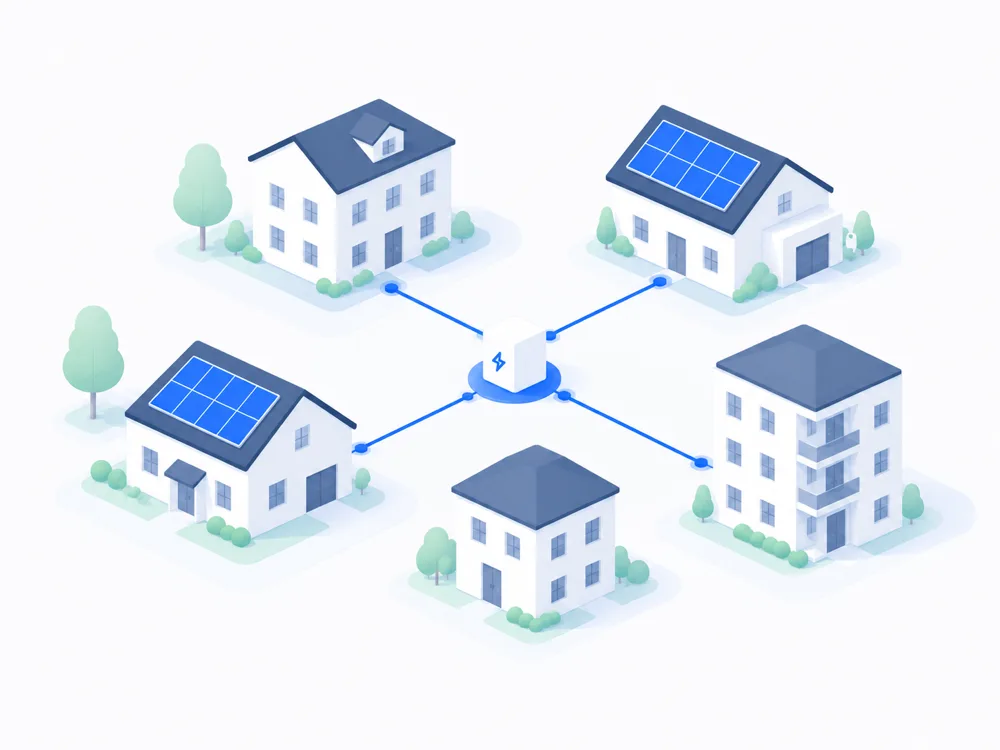
- Buildings connected to the same point of the grid
- A single apartment building, or several neighbouring buildings
- No grid usage charge on the shared electricity
Start your request now: the setup of your group is free, until Sunday, 11:59 pm.

Sell your production, or buy local solar electricity. Start with your address.
The electricity from your roof should benefit your neighbours before it goes to the grid for a few cents.

Wilfried Josset
Co-founder and CEO
The situation in figures
Between your supplier's feed-in tariff and the full tariff your neighbours pay, there is room for a shared price that works for both sides.
Indicative example. The shared price is agreed between the participants of the group.
Two legal frameworks
Depending on where the buildings sit on the grid, sharing takes one form or the other. SOLARSPLIT Community Connect handles both, at the same price.
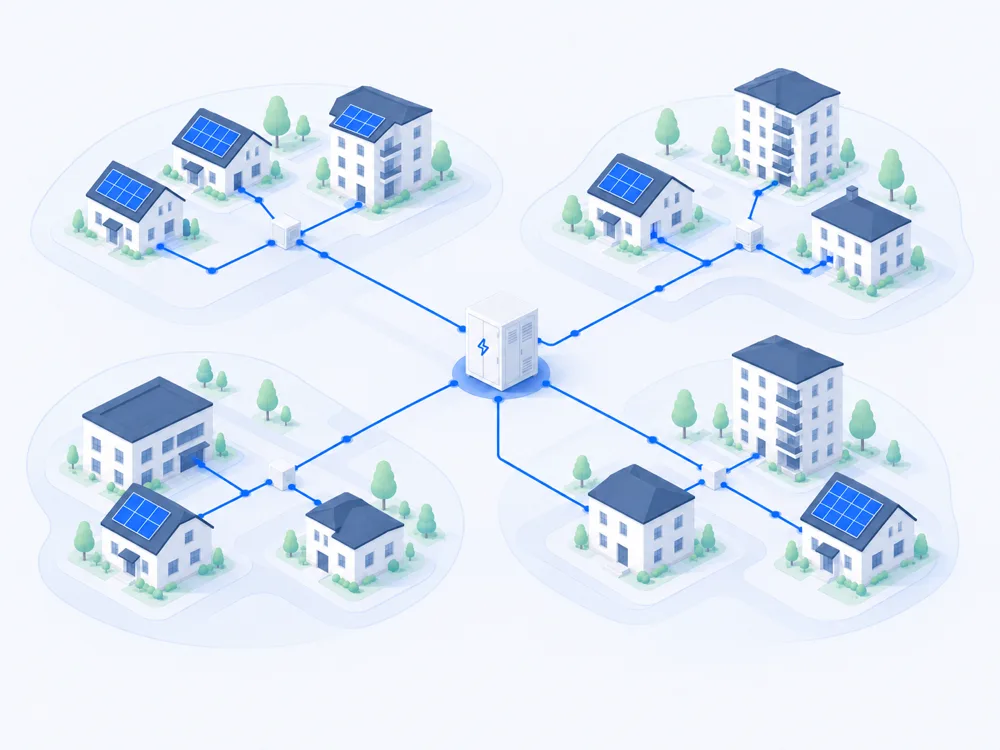
An RCPv can also join a CEL, as a single participant.
The process
SOLARSPLIT Community Connect takes care of the formalities, the decisions stay with you.
Your neighbours on the map
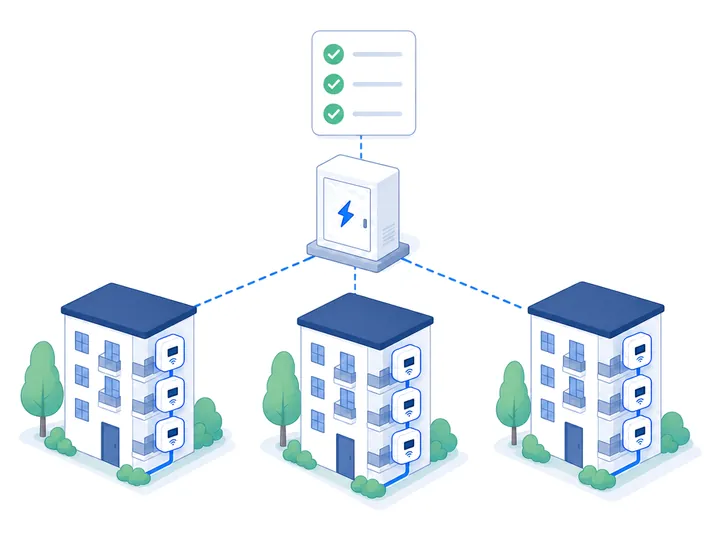
You choose which neighbouring buildings to share with. A single apartment building can also be enough.
Simulation and allocation key
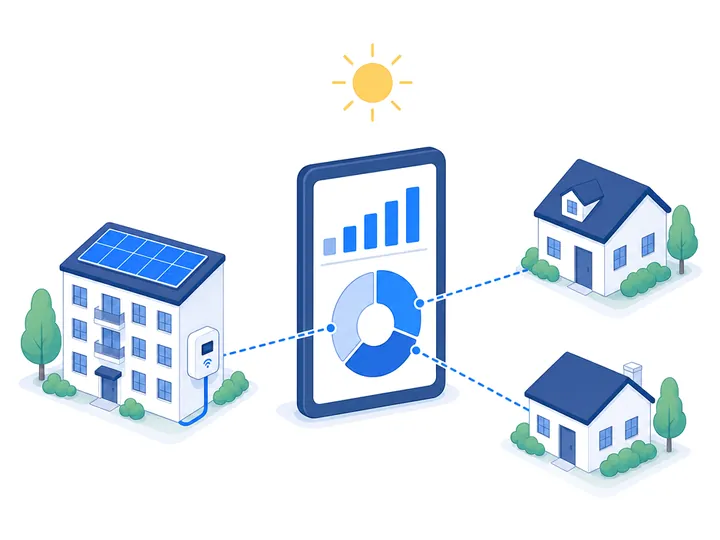
Production, consumption and shared electricity are simulated. Participants agree together on the allocation key and the internal price.
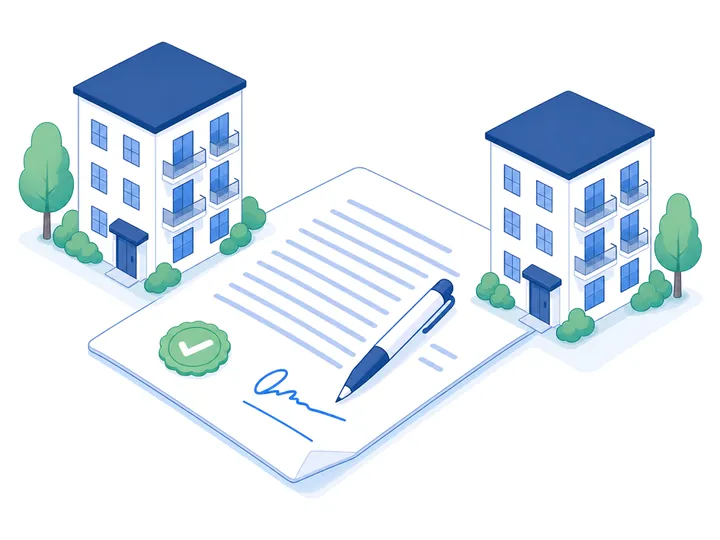
Digital contracts
The contracts between participants are prepared for your group and signed online.
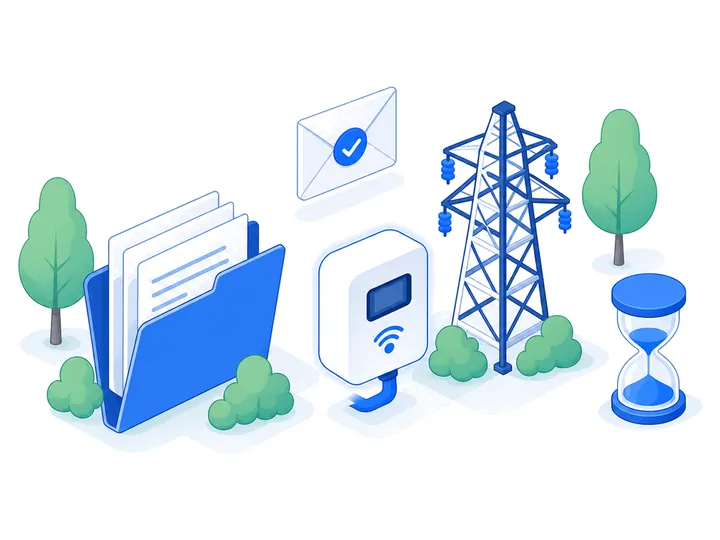
Setup and formalities
SOLARSPLIT registers the group and handles the formalities with the grid operator, under a power of attorney.
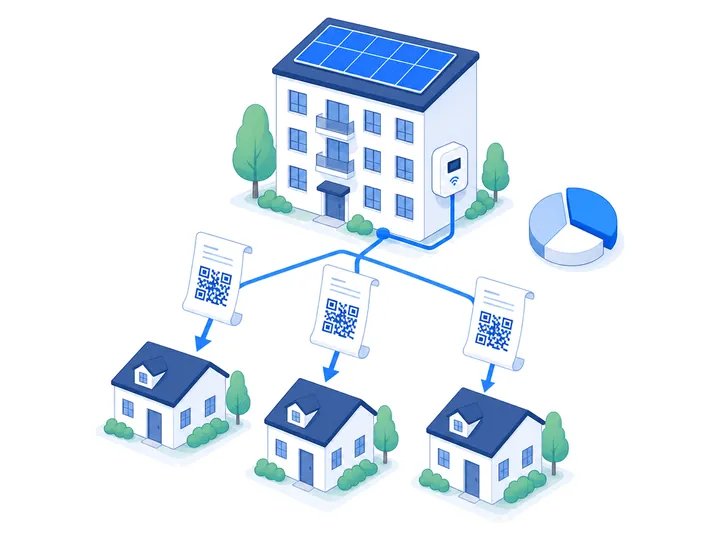
Statements and QR invoices
Smart meters measure every quarter of an hour. The statement, quarterly by default, allocates the shared electricity and each participant receives their QR invoice.
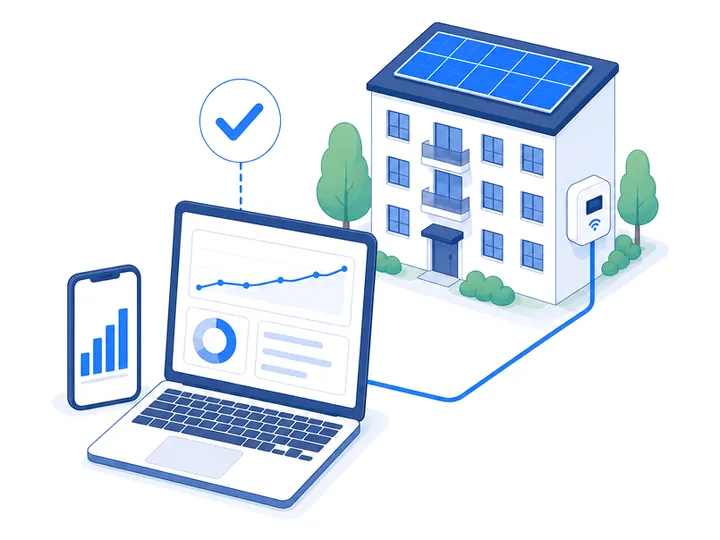
Reporting
Each participant follows the shared solar electricity and their own share in clear reporting.
For everyone
Your solar surplus is sold to your neighbours at an agreed internal price, instead of going to the grid at the feed-in tariff alone.
Solar electricity produced close by. For tenants, the price of the solar electricity recharged to them is capped, metering is not recharged and basic supply remains an option.
A free portfolio audit identifies the buildings where a group is possible.
On video
Eight short videos to understand solar electricity sharing between neighbours.
Videos in French
Pricing in plain terms
Setup
0.- Free
Flat fee per participant and year
15.- to 40.-
Depending on group size
On shared solar electricity
2.0 ct/kWh
Only on the solar kWh actually shared
The larger the group, the lower the flat fee
Prices excl. VAT.
Frequently asked questions
A service to share solar electricity between neighbours. It covers setting up the group, the formalities with the grid operator, the digital contracts and the statement of each participant.
An RCPv brings together buildings connected to the same point of the low-voltage grid, with no grid usage charge on the shared electricity. A CEL extends to a municipality and uses the public grid, with 40% off the grid usage tariff, or 20% if a voltage transformation is needed.
At least two participants and one solar installation. In an RCPv, production reaches at least 10% of the group's connection capacity. In a CEL, at least 5%, within the same municipality.
Yes. A group brings together consumers, producers and prosumers. It needs at least one solar installation, not necessarily on your roof.
At an internal price agreed between participants. In a CEL, it is free to set. In an RCPv, the price recharged to tenants is capped by law: the actual costs, or at most 80% of what they would have paid without the group.
Setup is free. Then a flat fee of 15.- to 40.- per participant and year depending on group size, plus 2.0 ct per shared solar kWh, prices excl. VAT.
You keep the choice to stay on basic supply. The price of the solar electricity recharged to you is capped, and the group's metering is not recharged to you.
No private meter. Metering relies on the grid's smart meters, every quarter of an hour.

An address is enough to start. We will look into what is possible for you.
Free request, with no commitment.