Guides
The real timeline of a solar project, from simulation to commissioning
12 May 2026 · SOLARSPLIT
“How long does it take?” is the last question a homeowner asks before leaving their number, and the honest answer is a range: three to eight months between the simulation and commissioning, with most projects landing around five. What matters is knowing where those weeks come from, because half of them depend on you and on the season, not on the professionals.
Week 0: the simulation, two minutes
The online study starts from your address, maps out your roof, places the panels and calculates production, self-consumption and subsidies. It costs nothing and commits you to nothing, and it is the moment to settle the questions that stall things later: what size, with or without a home battery, which roof face.
Weeks 1 and 2: the technical visit
Once the file is launched, a technical office comes on site within two weeks. It checks the roof covering, the roof structure, the electrical panel, the cable route, the actual shading, and writes the report that goes to the installers. It is the visit that avoids the nasty surprises on installation day, our guide on the condition of the roof explains what it looks at.
Weeks 3 and 4: the call for tenders
The installers in the network receive the same file and reply within two weeks. The offers arrive scored on the same criteria, an adviser comments on them, and you choose. Signing is immediate, online. In total, about a month has gone by since the file was launched, and that part runs to a fixed rhythm, it does not slip.
The following month: the formalities, in parallel
Three formalities start as soon as you sign, and they overlap.
- The notification to the municipality. An installation sufficiently adapted to the roof does not need a building permit in a building zone, the federal Spatial Planning Act has said so since 2014, it requires a notification before the works. The period is generally thirty days in the French-speaking cantons, Fribourg formalised it in 2026. A listed building or a façade installation goes through an ordinary procedure, then count two to three months more.
- The connection request. The installer declares the installation to the grid operator, which checks that the local grid accepts the capacity and sets the conditions, including the 70% feed-in limitation. A few weeks in the usual case, longer if a line reinforcement is needed, which happens on large installations in rural areas.
- Ordering the equipment. Panels and inverters are in stock at most installers, the long lead times of three years ago have gone. A home battery or a particular model can take a few weeks.
Two to six months: the installer’s schedule
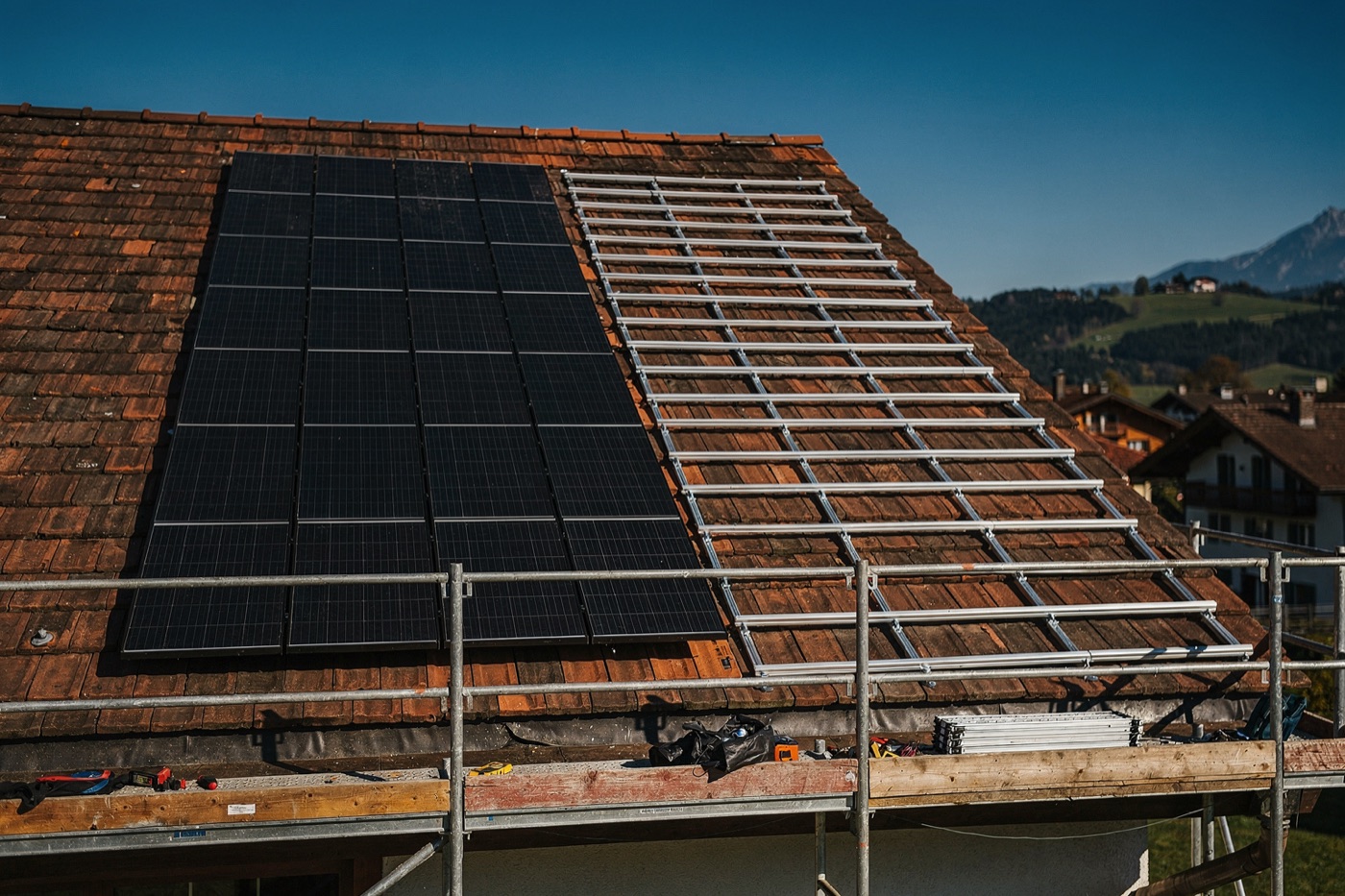
This is where the calendar is decided. The installation is carried out according to the schedule of the chosen company, and according to the season: two to six months after signing. Spring and autumn are busy, because everyone wants to produce from summer or before winter. A project signed in November is often installed in January or February, when order books are lighter, and it is ready for spring.
The installation itself is short: two to five days for a single-family house, scaffolding included, one to two weeks for an apartment building.
Commissioning and afterwards
Once installed, the installation is inspected, connected and commissioned. The electrical safety report is drawn up by the installer, and an independent inspection takes place depending on the capacity. The meter is adapted by the grid operator, often in the same week. Then the installer files the one-off remuneration application with Pronovo, whose payment arrives several months later, without delaying your production in any way. For the timing of the subsidies, our cantonal guides, Vaud or Geneva for example, say what is applied for before and what is applied for after.
Three moves that save weeks
- A complete file from the start: electricity bill, photos of the electrical panel and the roof, answers to the simulation’s questions. Every missing item costs a round trip.
- The notification to the municipality on the day of signing, not after. The thirty days run from filing, and the installer can plan in the meantime.
- Sign off-season. A file signed between October and January finds an installer faster than one signed in April, and the installation is ready for the months that produce the most.
The full course of a project details each step, and the free online study is the first of them.
And your roof, what is it worth?
The simulation is free and online, based on your building's public data.
Simulate my project