Guides
RCPv in an apartment building: getting value from every kilowatt-hour of the roof
18 June 2026 · SOLARSPLIT
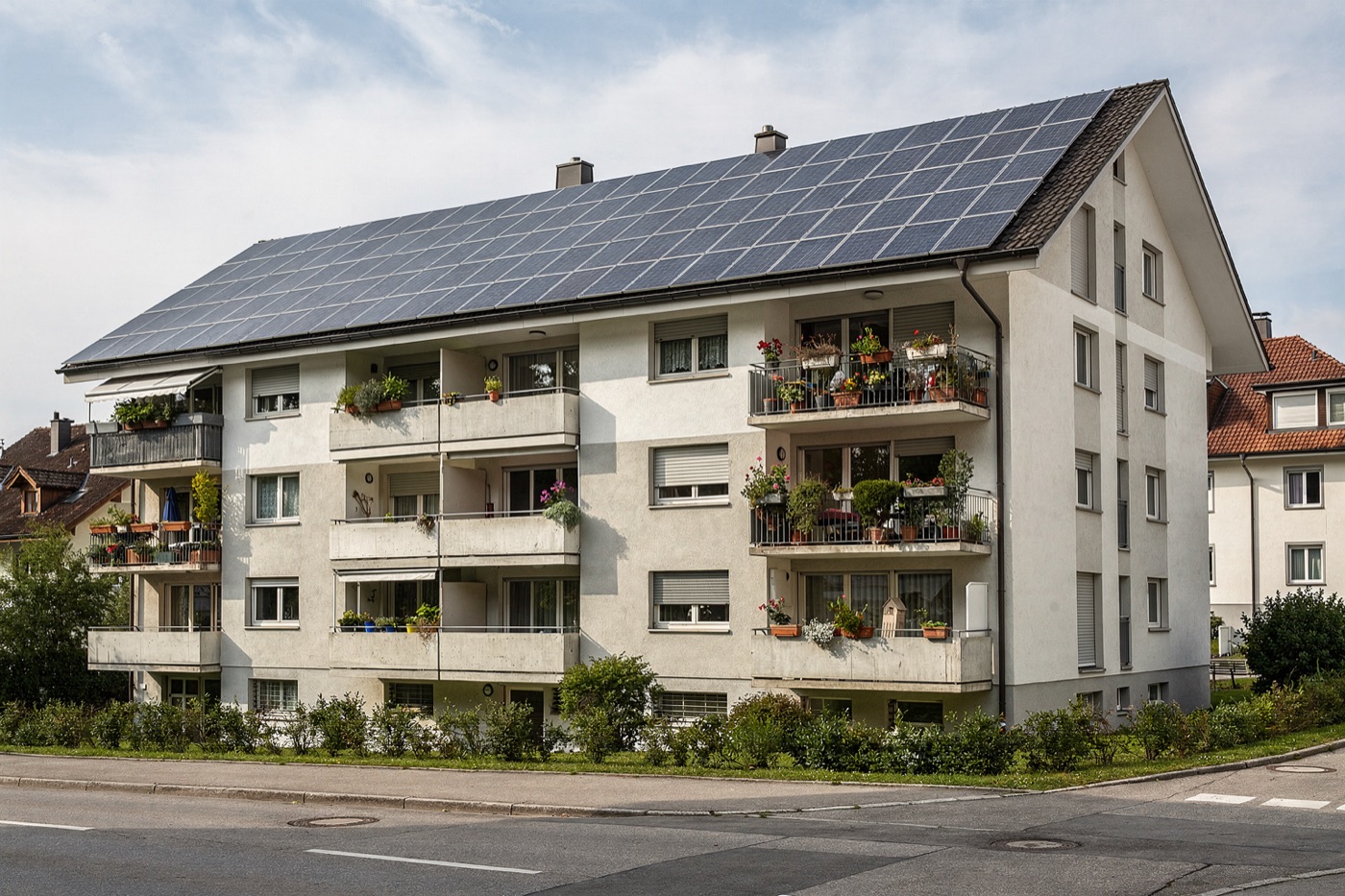
On a single-family house, the solar equation is simple: you produce, you consume, you feed the rest into the grid. On an apartment building, it gets more interesting. The roof produces a lot, the apartments consume all day long, and the self-consumption community (RCPv) connects the two.
The principle
The owner of the installation sells the solar electricity directly to the building’s occupants, through the building’s private lines. The current never leaves the plot, so no grid-use fees apply to those kilowatt-hours.
Everyone gets their share: the occupant pays less for solar electricity than the grid rate, and the owner earns more from it than the buyback rate for surplus. The gap between those two reference points is the community’s room to maneuver.
What it involves in practice
An RCPv is an organization, not just wiring:
- An allocation: who consumed which share of the solar production, measured or calculated.
- Billing: each participant receives a statement, with their solar share and the remainder drawn from the grid.
- A life of its own: tenants arriving and leaving, written rules.
It is this recurring mechanics that discourages owners, and it is what SOLARSPLIT Community Connect takes over, from forming the community to billing each participant.
What if the building has no panels yet?
The RCPv should be thought through from the installation project onward: the size of the community influences the ideal sizing of the rooftop installation. Start with the building’s free simulation, then read how a solar project unfolds for the rest of the journey. And when several installer offers come in, comparing them seriously counts double on an apartment building project.
For sharing beyond the building, with neighbors across the area, the local electricity community (CEL) takes over: RCPv and CEL explained simply.
And your roof, what is it worth?
The simulation is free and online, based on your building's public data.
Simulate my project