Guides
Condominium: deciding on a solar installation at the owners' meeting, without getting lost in the majorities
8 August 2026 · SOLARSPLIT
The roof of a condominium building belongs to all the co-owners, and a solar installation is decided at the owners’ meeting. That is where many projects die, not for lack of interest, but for lack of preparation: the question of majorities is misunderstood, the financing is not framed, and nobody has any figures. Here is how to carry the decision through to the vote, and win it.
What majority is needed
The Swiss Civil Code distinguishes three families of works on the common parts. Necessary works, maintenance and repairs, are decided by a majority of the co-owners. Useful works, which increase the value or usefulness of the building, require the double majority by heads and shares: the majority of the co-owners, who at the same time represent more than half of the shares. Luxury works, which mainly serve comfort and amenity, require unanimity.
A photovoltaic installation is classed in practice as useful works: it reduces the charges of the common areas and can supply the flats. The double majority is therefore the rule to aim for, and your condominium’s administration regulations may provide for a different threshold, they have to be read before convening the meeting.
What the reform changes, and does not change
A revision of condominium law is under way: the Federal Council adopted its dispatch on 13 May 2026, and Parliament still has to debate it. It concerns the constitution of condominiums and the renovation fund, which a co-owner will be able to have imposed by a judge. It does not, at this stage, change the majorities applicable to works. A solar project therefore gains nothing by waiting, and the renovation fund, where it already exists, is a natural means of financing.
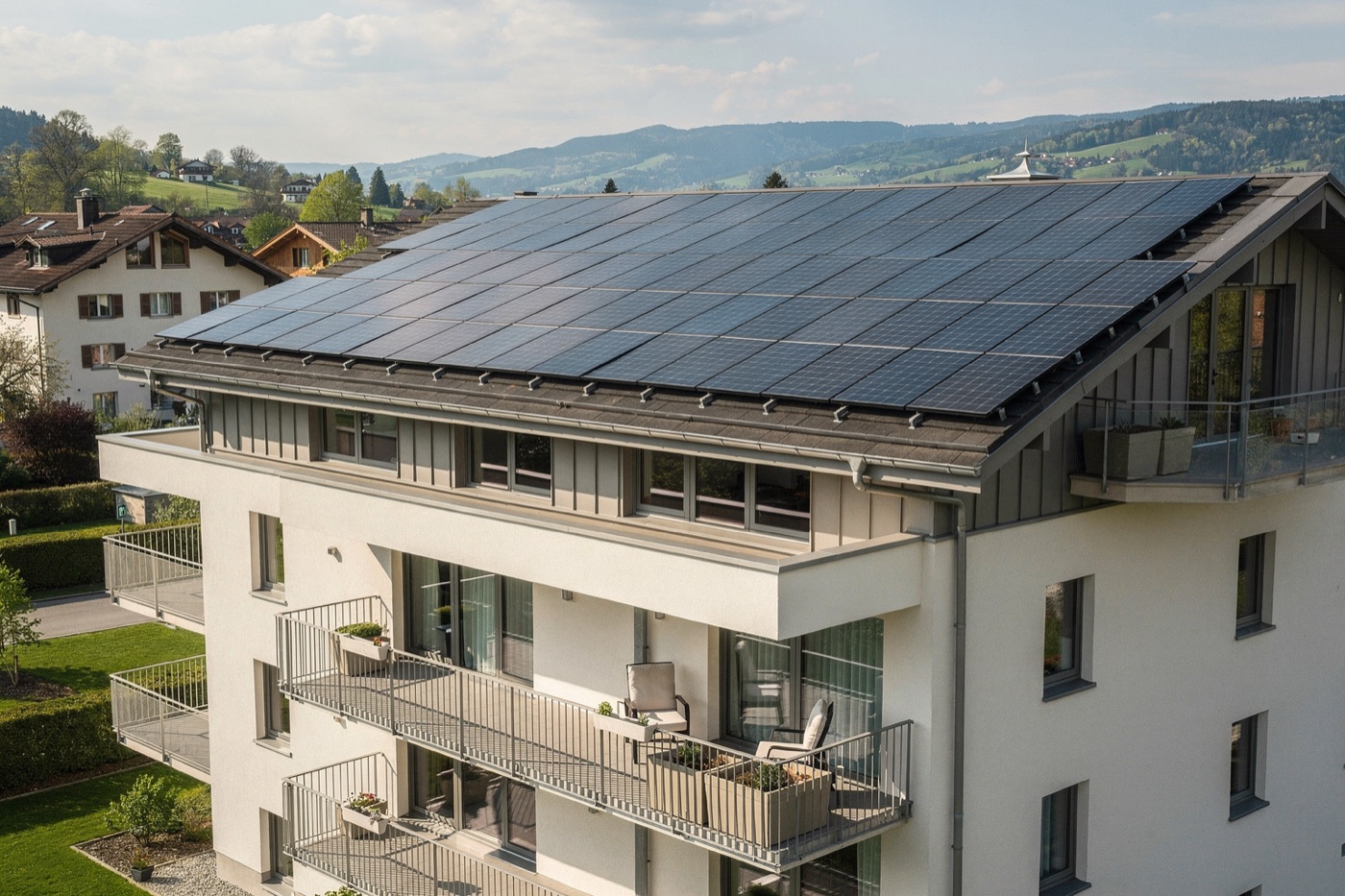
Preparing the vote: figures before opinions
A meeting votes against what it does not understand. What gets a project through is a file of a few pages, distributed with the notice of meeting, that answers the questions in the order they come.
- How much it produces. SOLARSPLIT’s online study works on an apartment building as on a villa: address, usable roof surfaces, expected production, one-off remuneration. It gives the first defensible figure.
- How much it costs, and net of what. A 25 kWp building costs in the order of 35’000 to 45’000 francs gross, less the federal one-off remuneration, and each co-owner deducts their share of the cost from their taxable income. Our article on the cost of an installation gives the ranges.
- Who pays and how. From the renovation fund if it is sufficient, otherwise through a call for funds split according to shares, like all common works. Bank financing by the condominium is possible but heavier.
- Who benefits. Without a community, only the common areas consume the roof’s electricity and the rest is sold to the grid. With a self-consumption community (RCPv), the flats consume it first, and the condominium bills it to the occupants at a price below the grid. That is what turns a thirteen-year investment into a ten-year one, our calculation on a six-flat building shows it line by line.
- Who decides what next. The mandate to the committee or the administrator to launch the call for tenders, choose the installer on comparable offers, sign, and set up the community.
The objections you hear, and the answers
- “My flat is on the ground floor, I get nothing out of it.” With a community, each flat receives its share of the solar electricity at the internal price, whatever the floor. Without a community, everyone benefits from the drop in the charges of the common areas.
- “The roof will have to be redone one day.” That is true, and the question is dealt with before installing, not after. Our guide on the condition of the roof says when to renovate first.
- “The tenants do not want any change.” They cannot pay more than the grid, the law guarantees it, and they receive a separate statement. Our article for tenants answers their questions.
- “The return is uncertain.” The production of a roof can be calculated to within a few percent from federal data, and the one-off remuneration is secured. What remains uncertain is the price of electricity, and it works in the project’s favour with every increase.
The typical course
Online study for the building, file with the notice of meeting, vote by double majority with a mandate to the committee, technical visit, comparative call for tenders, signing, notification to the municipality, installation in one to two weeks, then setting up the community with the grid operator, which requires three months’ notice. Allow six to nine months between the decision and the first solar statement to the flats.
SOLARSPLIT supports condominiums on both fronts, the roof with Install and the sharing with Community Connect. The first step is the online study at the building’s address, it gives the figures needed to convene the meeting.
And your roof, what is it worth?
The simulation is free and online, based on your building's public data.
Simulate my project